
EDITORIAL & BRAND > CASE STUDYTwo Kinds of Light
A self-initiated menswear editorial, photographed across two Copenhagen districts in a single afternoon. The brief: let hard shadow and golden hour argue with each other, and find out whether one wardrobe could hold both.
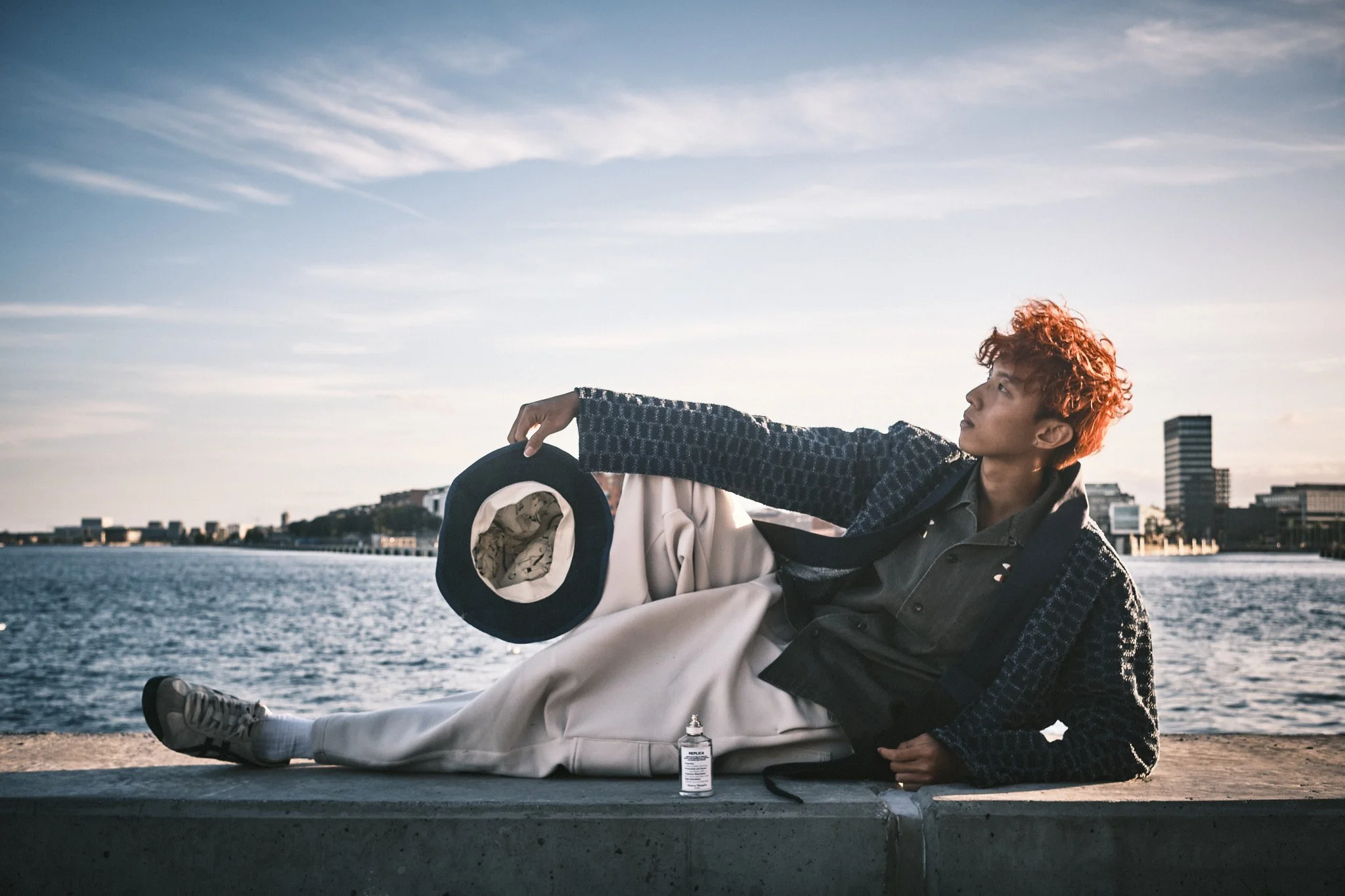
PROJECTSelf-initiated editorial, menswear
PHOTOGRAPHERLuca Stefanelli
LOCATIONSØrestad and Nordhavn, Copenhagen
PHOTOGRAPHEDSeptember 2026
SUBJECTLukas Jia Yi Cheng
WARDROBEChota House, Onitsuka Tiger, and the subject's own pieces
CREWNone, photographer & subject
CAMERAFujifilm X-T5
POSTCapture One
DURATIONOne afternoon
SELECTED FRAMESTen
SERVICE LINEEditorial & Brand
In brief
Two Kinds of Light is a self-initiated menswear editorial photographed by Luca Stefanelli in Copenhagen. It was shot in one afternoon across two districts: Ørestad, for its concrete and brick colonnades and the hard geometric shadows they throw, and Nordhavn, for the low warm light coming off the harbour at the end of the day. There was one client and no crew: one photographer, one subject, and a wardrobe of Japanese-influenced workwear the subject already owned. The set alternates wide environmental frames, where the architecture carries half the picture, with close detail of jewellery and embroidery. Some frames were finished in black and white, where contrast was doing all the work on its own.
Hard light cuts. Low light forgives.
Most shoots pick one.
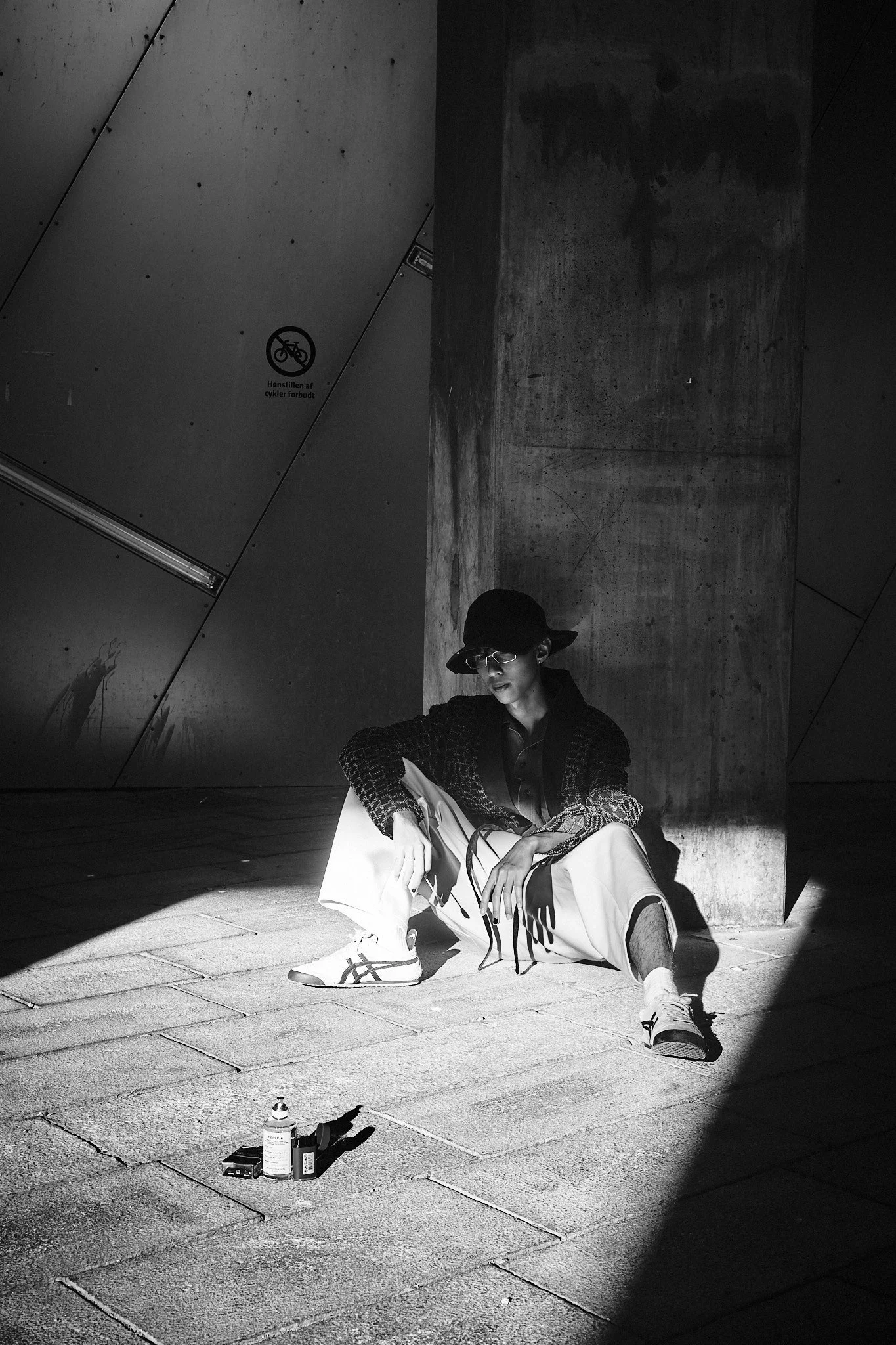
Ørestad. Midday sun against concrete — the shadow given as much weight as the subject.
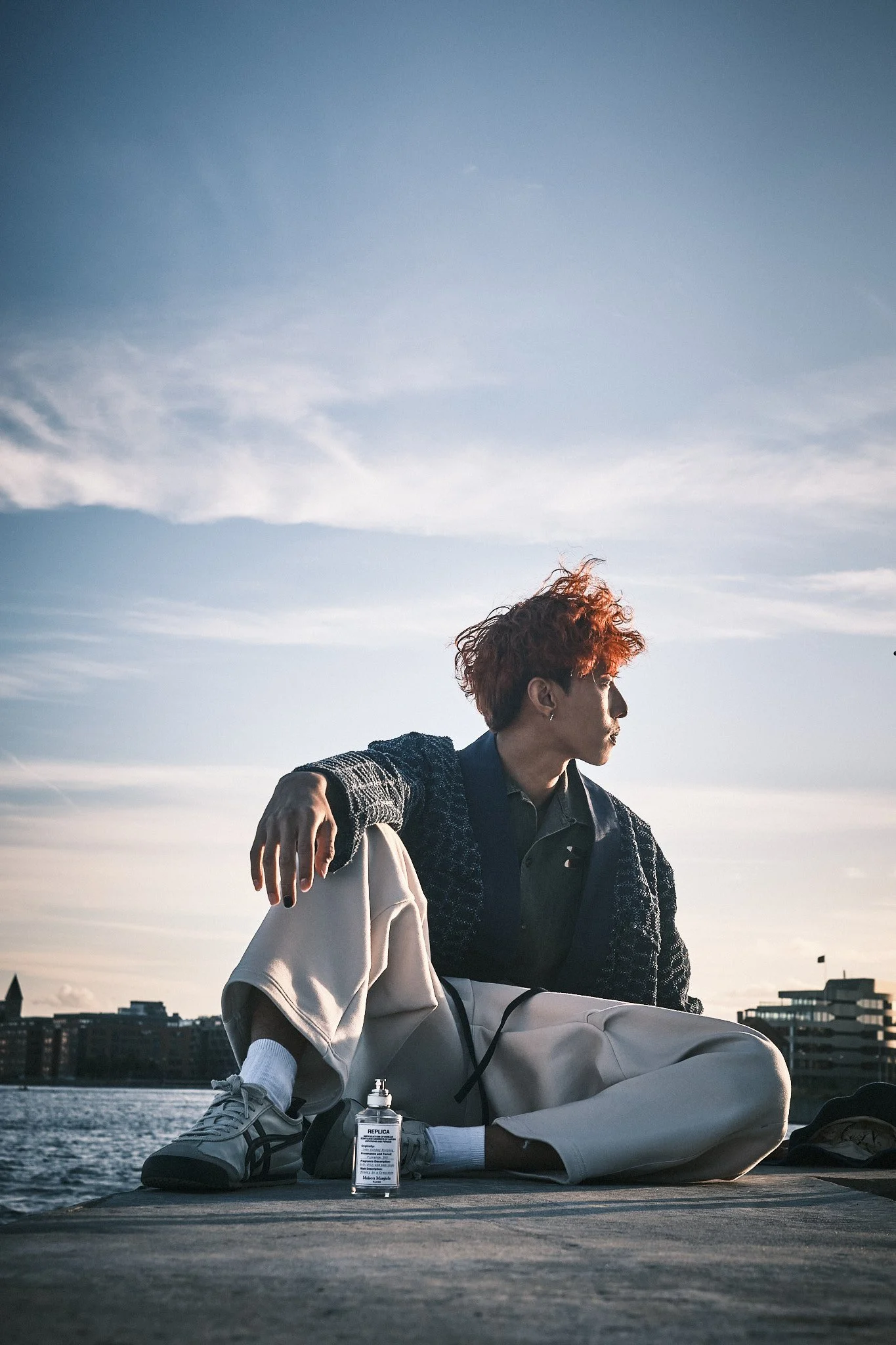
Nordhavn, roughly three hours later. Same wardrobe, entirely different temperature.
Conversation
On a commission, this is where I get to the brand, the audience and the narrative direction before anything visual is decided.
Here the client and the subject were the same person, so the conversation was with the subject directly. What did he already own, what would he wear without being asked to, and what did he want to look like standing still for an hour?
The answer set the register before a single location was chosen: indigo with a sashiko-style stitch, wide cream trousers, a grey chambray shirt with a dragonfly embroidered on the chest, and a gold flower brooch on a chain. Japanese workwear, essentially, which meant the shoot needed Danish surfaces to push against rather than agree with. That one decision made every subsequent one easier.
Treatment
On a commission I write this down and send it: references, mood, locations, timing. A client should know what they are getting before the day.
This treatment was one line long — two kinds of light in one afternoon — and a location list with exactly two entries.
Ørestad first, while the sun was still high enough to be unkind. It is a district built out of brick, concrete and glass with very little softening it, and at the right hour the colonnades throw shadows at regular intervals, like a metronome laid across the ground. Nordhavn second, at the harbour edge, timed so the sun would be low over the water and the light would come in almost horizontally.
The second rule was about distance, not light: keep alternating between wide frames where the building does half the work, and close ones where you can see a brooch sitting in an open palm. A person is both of those things at once, and a set that only does one of them tells you less than it thinks.
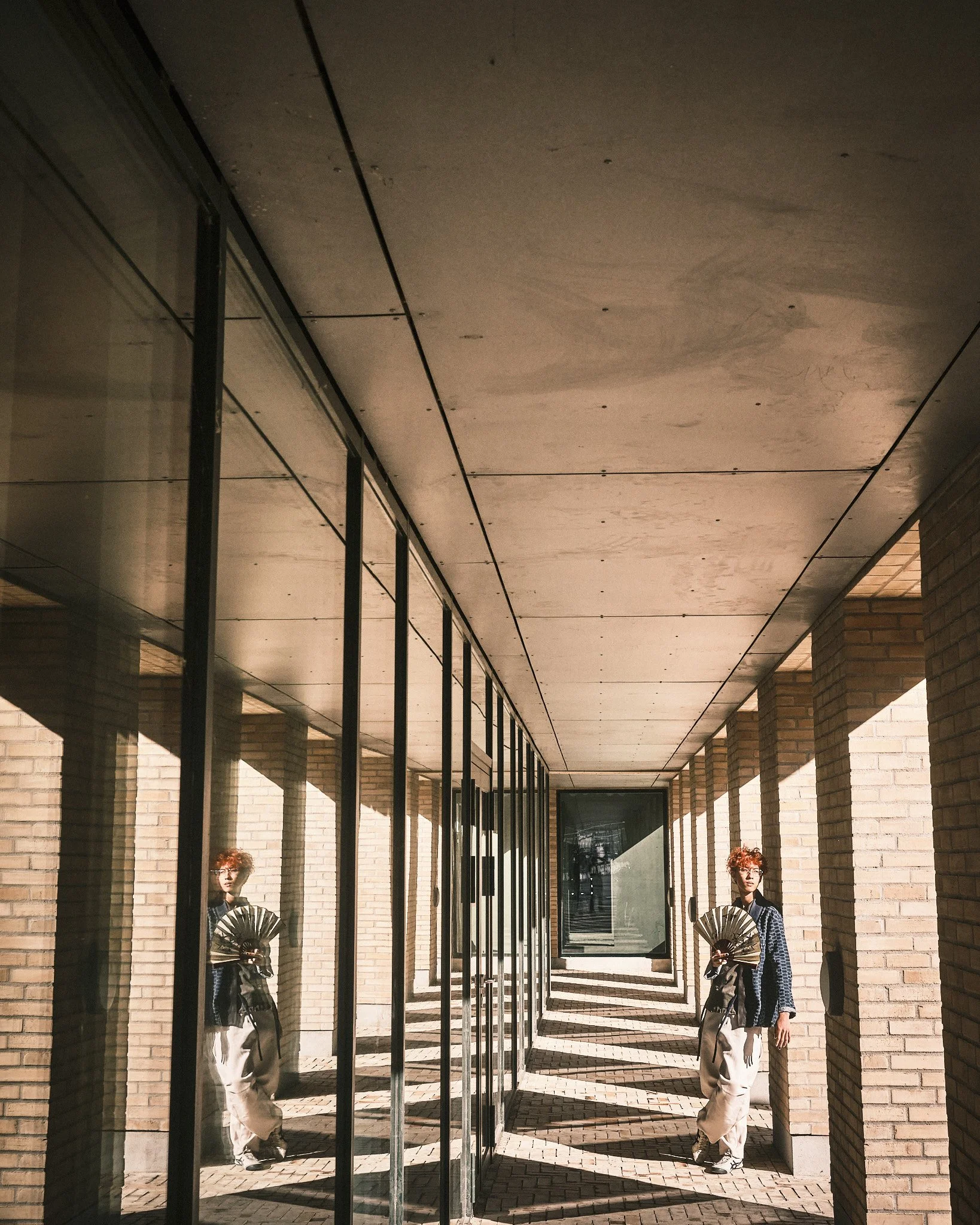
The shadow ladder that decided the first half of the shoot — and the glass that gave the frame a second subject for free.
Production
On a commission this is the location day: shooting with intention against the treatment, not hunting for a picture on the spot.
One afternoon, no lighting kit, no assistant. The whole production was a route: start inland where the architecture is hardest, work outward toward the water, and let the sun set the schedule rather than the other way round.
That is less relaxed than it sounds. The hard-light half has a window of maybe two hours before the sun gets too low to cut properly, and the golden half in September is shorter still. Everything was blocked in advance so that the time on location went into the subject rather than into deciding where to stand.
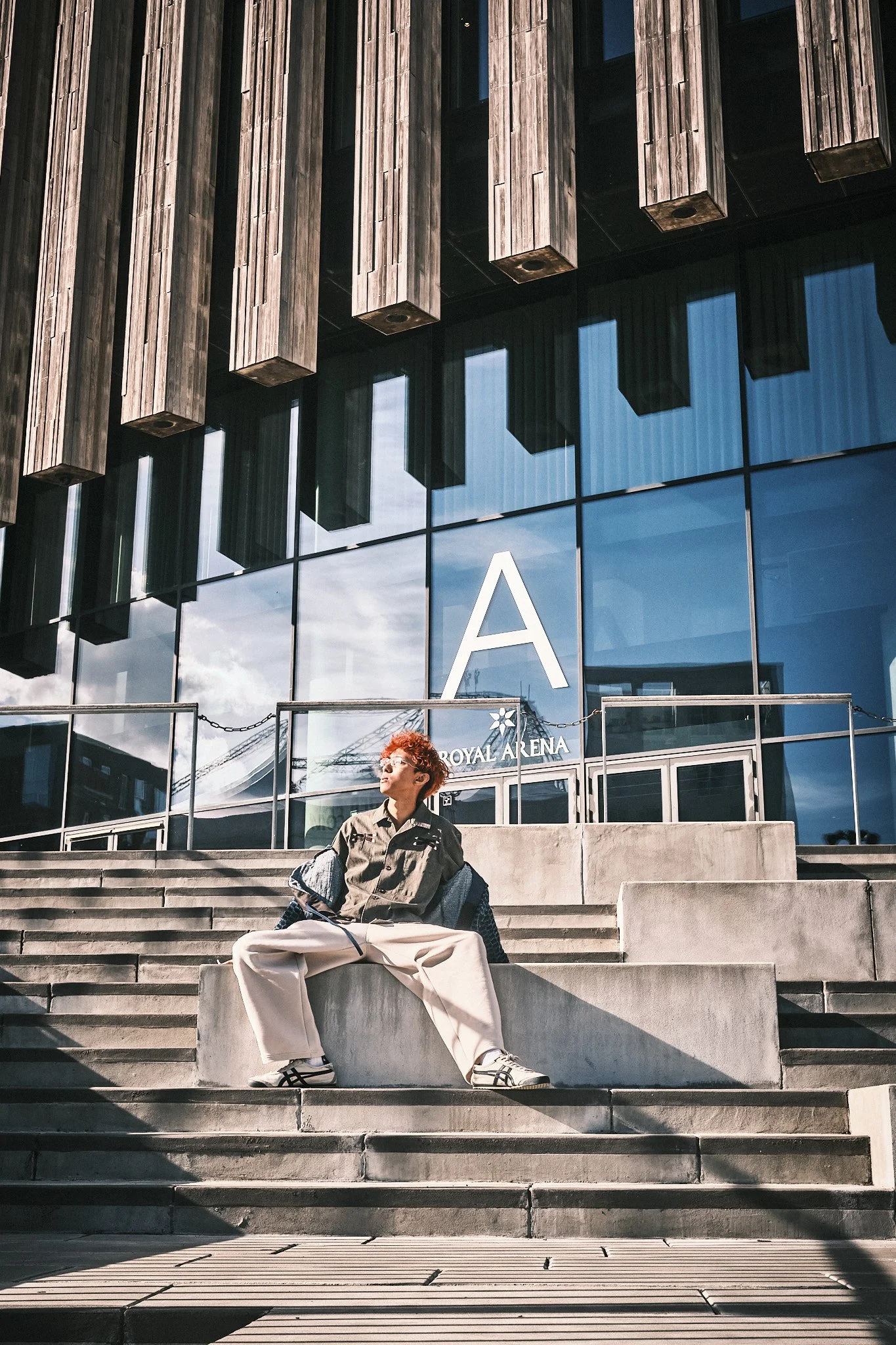
Ørestad. Glass and timber, and enough sun to make the steps read as planes rather than surfaces.
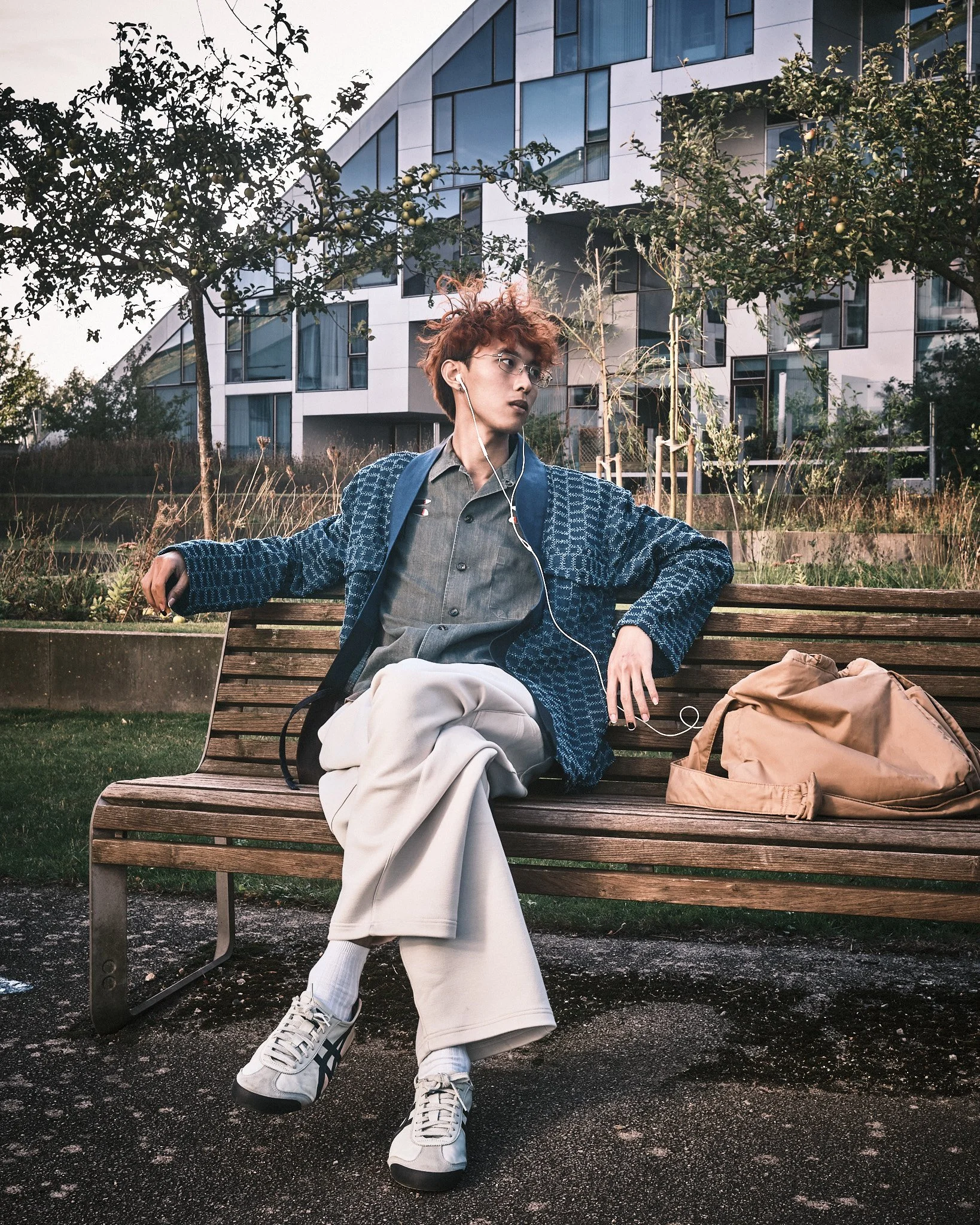
Softer interval to give the sequence somewhere to breathe.
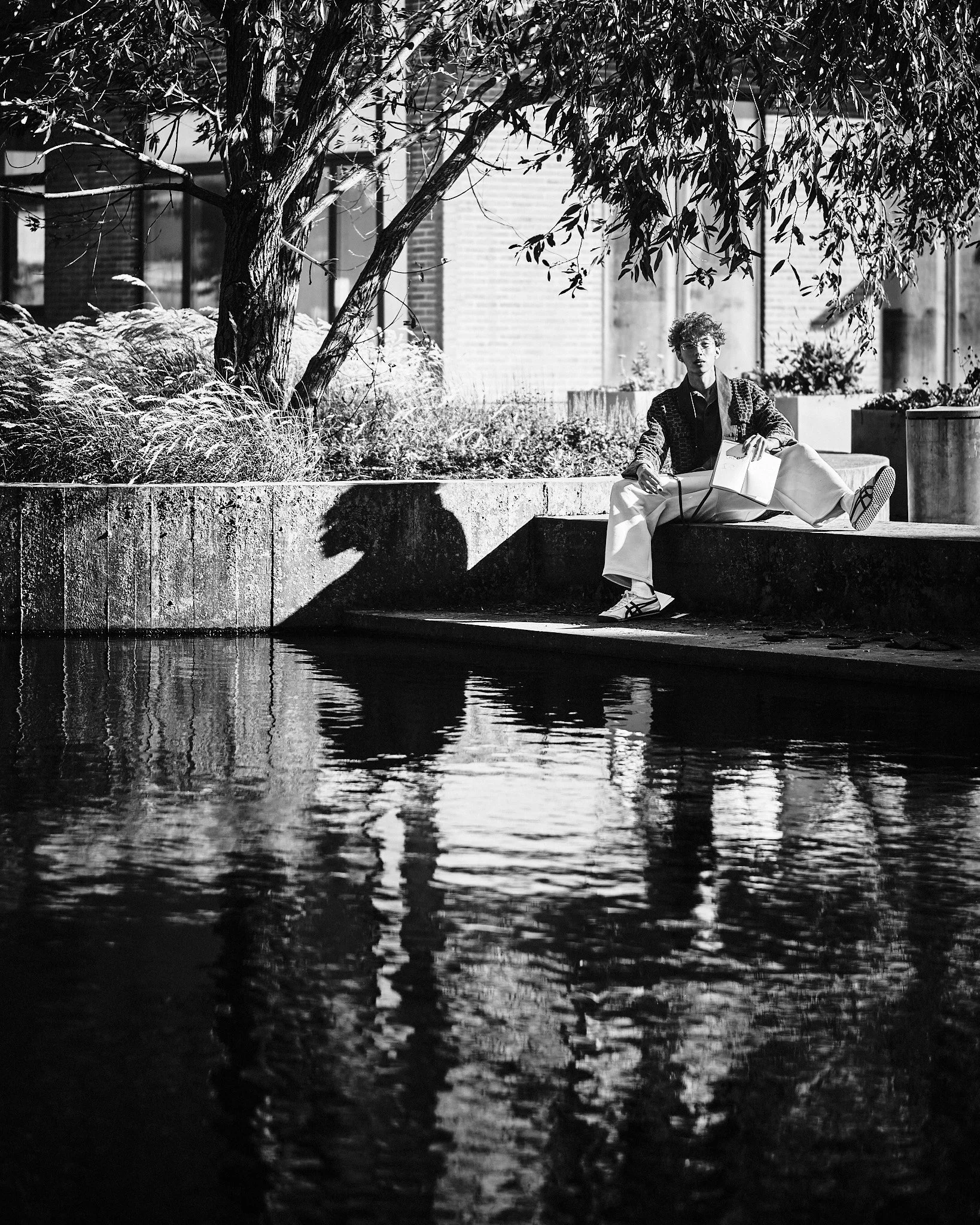
The widest frame in the set. At this distance the wardrobe stops being clothing and becomes shape.
Edit
On a commission this is the location day: shooting with intention against the treatment, not hunting for a picture on the spot.
Ten frames out of the afternoon. The edit had one job, make the argument visible, so the sequence alternates hard and soft rather than grouping them, and the two black-and-white conversions sit in the middle, where the colour has least to contribute and the contrast has most.
Processing was done in Capture One on a Fujifilm X-T5: desaturated, slightly warm-cast, grain left where it fell. Skin was not smoothed and the shadows were not lifted. The point of shooting in light that hard is to keep it.
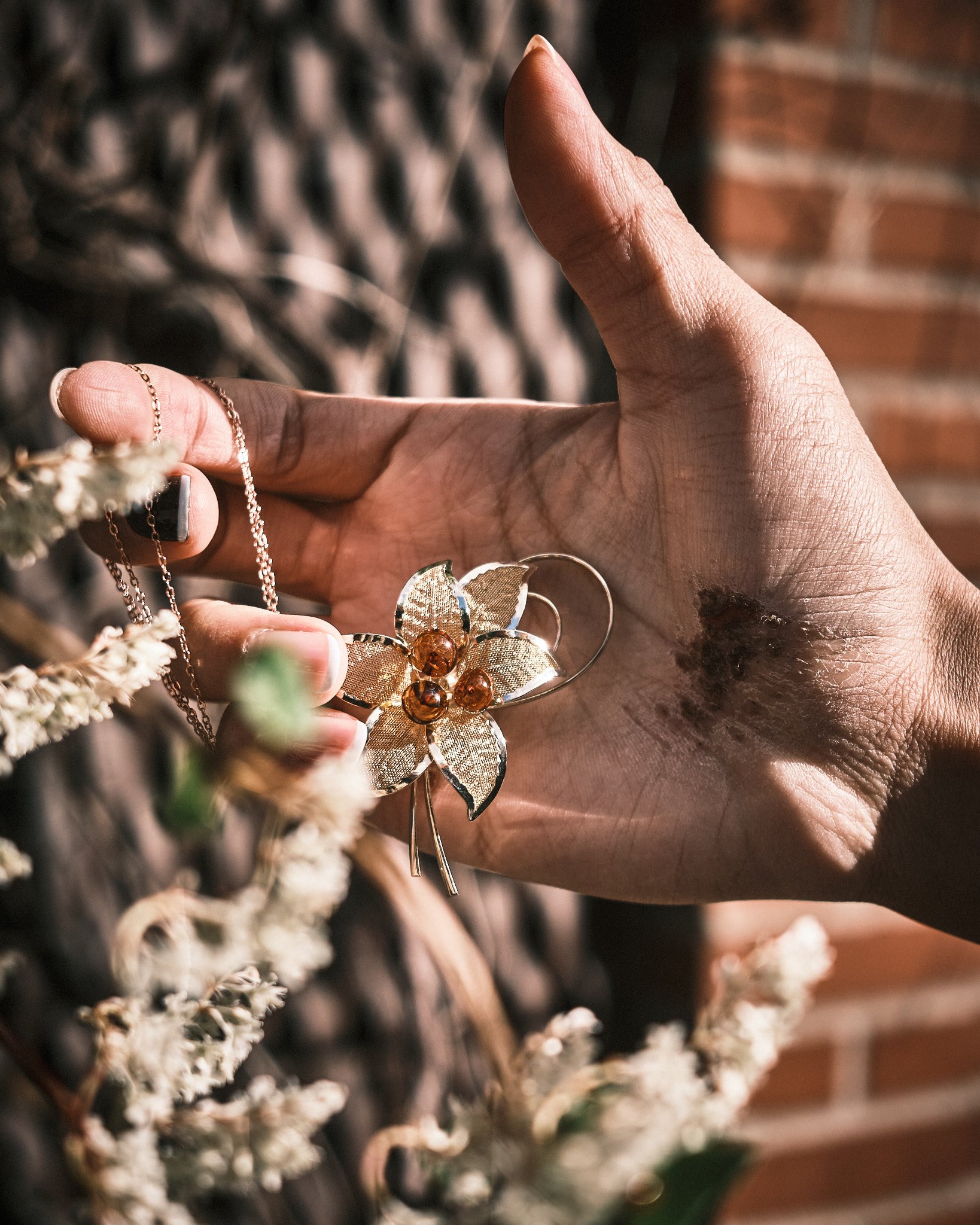
Detail carries what a wide frame cannot: weight, temperature, the fact that someone chose this.
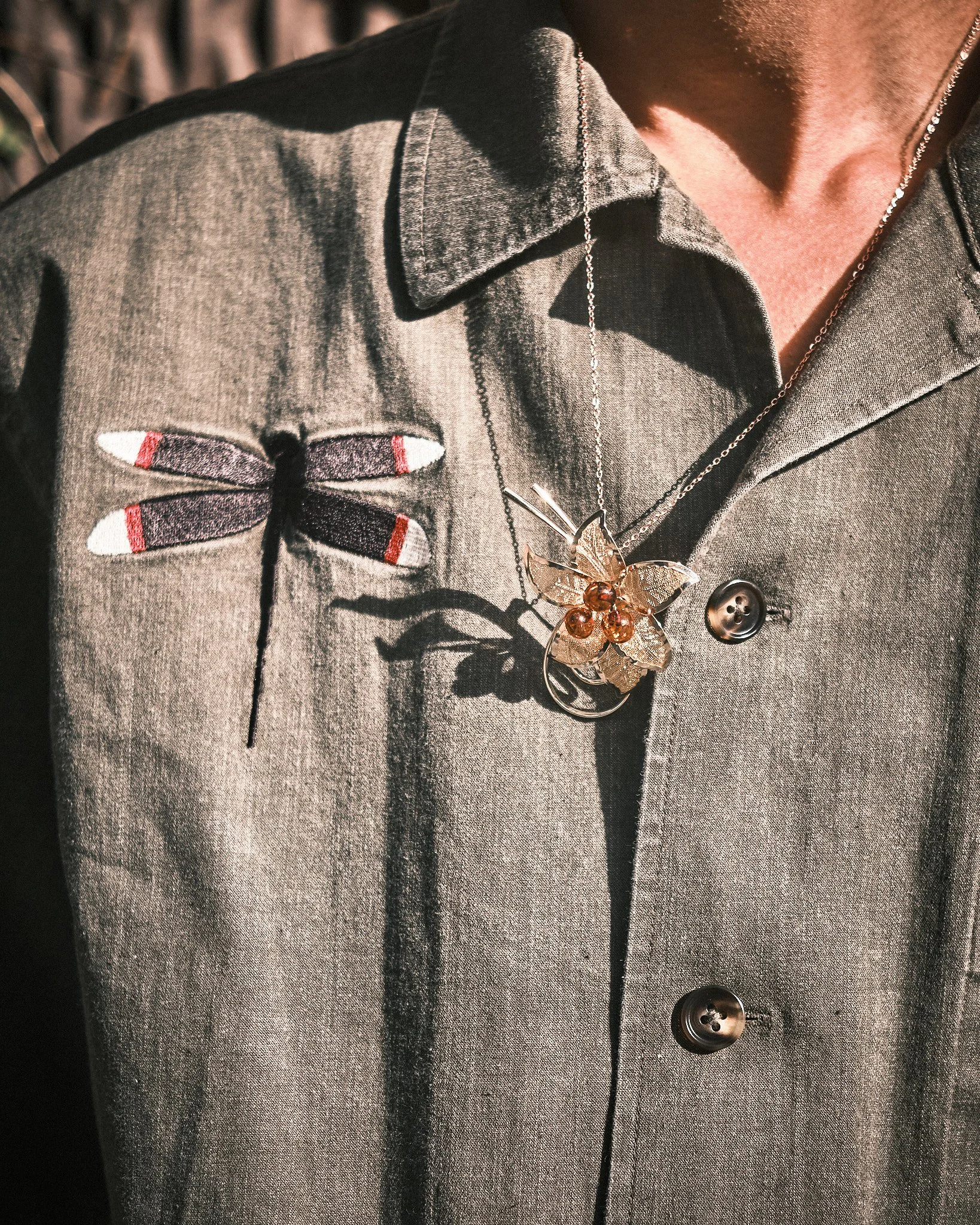
The dragonfly and the brooch, and the shadow the low sun made of them.
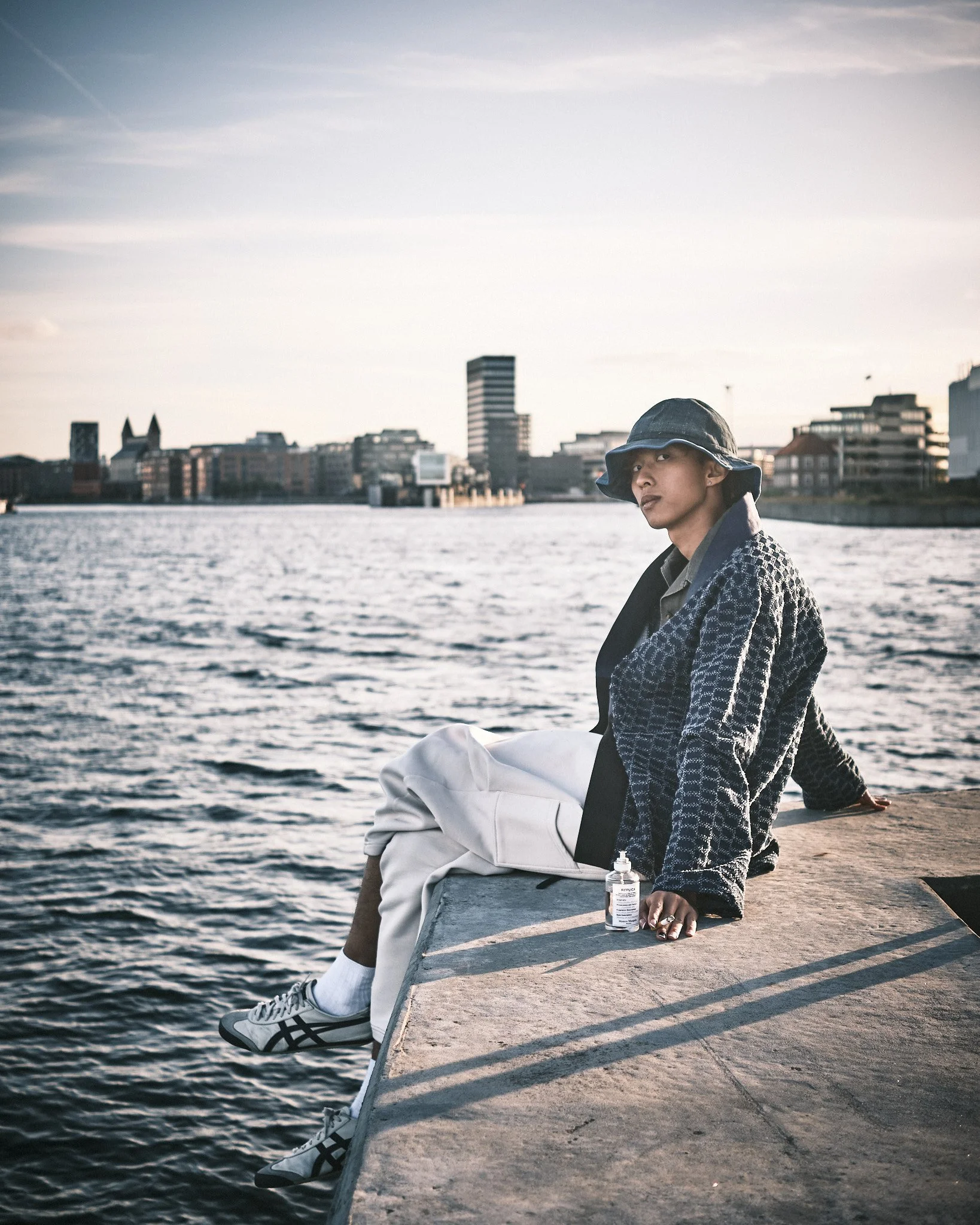
Nordhavn, the last usable light of the day, and the frame the sequence closes on.
What a commission like this includes
This one had the client and the subject as the same person, but it was produced exactly the way a commissioned editorial is. If you are considering something similar, this is the shape of it.
A conversation about the brand, the audience and the story before any visual decision gets made.
A written treatment — references, mood, locations, timing — sent before the shoot, so nothing about the day is a surprise.
Location production, natural light, shot against the treatment rather than improvised.
A curated, finished edit delivered as high-resolution files, with retouching kept minimal by design.
Usage and licensing agreed in writing up front — uses, territories, duration.
Credits
PHOTOGRAPHYLuca Stefanelli
SUBJECTLukas Jia Yi Cheng, @l_ukars
STYLINGSubject & photographer
WARDROBEChota House, Onitsuka Tiger, Maison Margiela Fragrances, Subject Own wardrobe
LOCATIONSØrestad and Nordhavn, Copenhagen
DATESeptember 2026
Questions about this project
-
Two Kinds of Light is a self-initiated menswear editorial photographed by Luca Stefanelli in Copenhagen, Denmark. It was made in a single afternoon in Ørestad and Nordhavn, and it deliberately sets hard midday shadow against low golden-hour light within one set of images and one wardrobe.
-
Yes, but partially. Two Kinds of Light was self-initiated and self-produced, with one client and no crew :one photographer and one subject. It was produced to the same process Luca Stefanelli uses on commissioned editorial work: conversation, written treatment, location production, curated edit. Any brands visible in the images appear as part of the styling and did not commission or pay for the work.
-
In two districts. Ørestad, on the island of Amager in the south of the city, supplied the hard-light half: brick and concrete colonnades, glass facades and the sharp regular shadows they throw when the sun is still high. Nordhavn, the harbour district in the north, supplied the golden-hour half, with low light coming in almost horizontally off the water.
-
The images were shot on a Fujifilm X-T5 in available light — no flash, no reflectors, no assistant — and processed in Capture One from a Classic Negative base, giving a desaturated palette with a warm cast. Retouching was kept minimal: skin was not smoothed and shadows were not lifted, because the hardness of the light is the subject of the series rather than a problem to correct.
-
Because most editorial sets commit to one and lose the other. Hard light describes structure — bone, fabric weave, the edge of a building — while low warm light describes mood and skin. Photographing both in a single afternoon, with one wardrobe and one subject, shows a brand that its product holds up in the unflattering half of the day as well as the flattering one. That is more useful to a client than a set where every frame was made in the same twenty forgiving minutes.
-
Yes. Editorial and brand commissions are Luca Stefanelli's main commissioned service: editorial campaigns and seasonal stories, brand portraits and atmosphere imagery, products photographed in real environments, and long-form visual essays for magazines. The typical clients are independent labels, magazines, hospitality groups, makers and designers — brands that prefer atmosphere over noise. Studio work is not a speciality; this is location and natural-light photography.
-
Projects are quoted individually rather than priced from a rate card. A quote reflects the number of location days, travel, the scope of the edit, and the image usage rights required — a local campaign for one season costs considerably less than global rights in perpetuity. Written quotes are sent within a few days of receiving a brief.
-
A shoot of this size is a single location day. A first edit follows within one to two weeks, with final high-resolution files shortly after. For booking, allow four to six weeks of lead time for a single-day shoot; larger productions need longer.
-
Yes. He is based in Copenhagen and works most often across the Nordics, shoots regularly in Italy, and travels for projects that suit the work.